
IPEE SUMMER SCHOOL 2026
International Political Economy and Ecology (IPEE) Summer School
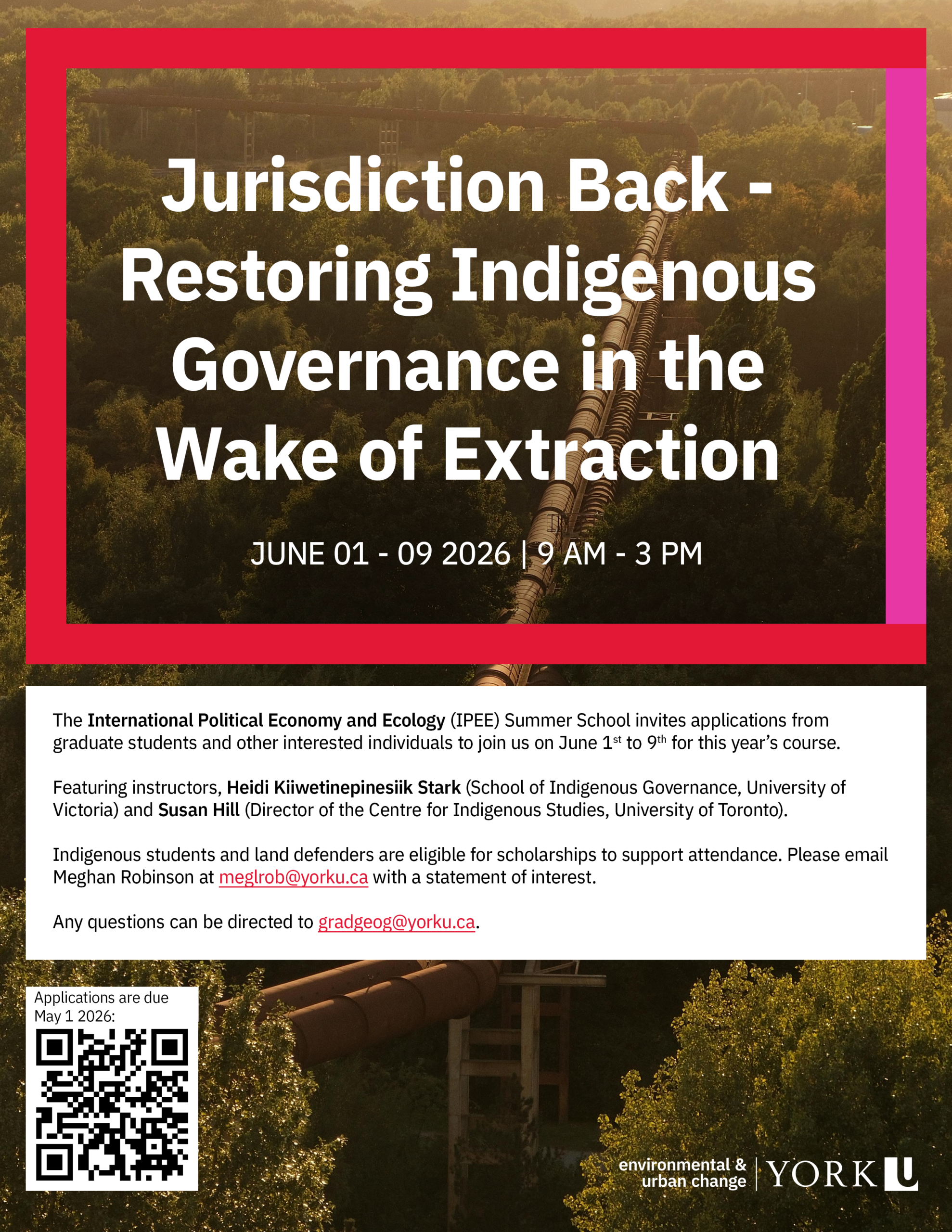
June 1-9, 2026Jurisdiction Back: Restoring Indigenous Governance in the Wake of Extraction
This course emphasizes land-based learning and practice, collaborative and critical engagement, and theories grounded in relationality. This interdisciplinary course examines “Indigenous jurisdiction” as inherent governing authority: a living, practiced form of collective governance, with particular attention to how it is disrupted in contexts of ongoing settler colonial extractivism. Drawing on political theory, Indigenous legal geographies, Indigenous feminisms and environmental justice writing and practice, the course explores how extractive regimes have reshaped land, law, and authority, and how Indigenous nations continue to assert and exercise jurisdiction through refusal, resurgence, and governing according to an ethics of care.
Students will engage with Indigenous political thought alongside case studies from across Turtle Island, focusing on struggles over land, consent, infrastructure, and environmental decision-making. The course is grounded in Indigenous analyses of sovereignty, relationality, obligation and responsibility, asking what it means to “bring jurisdiction back”. Students will strive to think critically beyond state extractivism and colonial authority, in order to imagine political and legal futures centred around restoring Indigenous laws and lifeworlds.
Guest Instructors:
Dr. Heidi Kiiwetinepinesiik Stark, School of Indigenous Governance, University of Victoria
Dr. Susan Hill, Director of the Centre for Indigenous Studies, University of Toronto
(alongside other Indigenous and anti-colonial activists and scholars)
Course Director:
Dr. Dayna N. Scott, Osgoode Law School and Faculty of Environmental and Urban Change, York University
Course Information:
The dates of the course are: June 1 to June 9, 2026 (9:00 am to 3:00 pm EST time).
Location: to be confirmed.
A list of required readings and details of written assignments will be available before the class begins.
For more information, please contact gradgeog@yorku.ca.

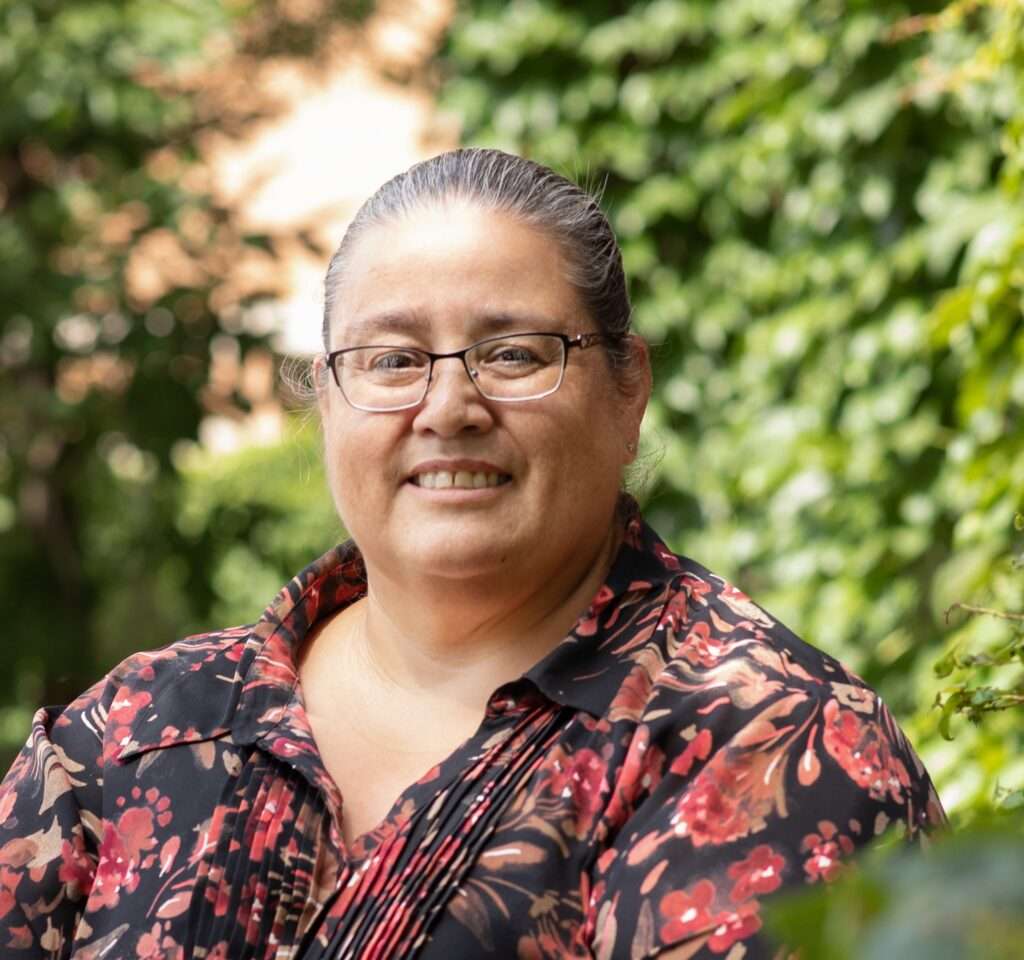

Dr. Heidi Kiiwetinepinesiik Stark
Dr. Susan Hill
Dr. Dayna Nadine Scott
Application Information:
The IPEE Summer School invites applications from graduate students and other interested individuals.
Application procedures for the IPEE Summer School vary, depending on whether or not you intend to take the course for academic credit.
The deadline to apply is April 15, 2026.
Application Procedures:
1. Students intending to take the Summer School for academic credit.
The academic credit value for the IPEE Summer School is 3.0 credits.
1.1 Ontario Graduate Students, including York University Graduate Students
1. Fill out this form 2026 International Political Economy and Ecology Summer School York University
2. Non-York students must file an Ontario Visiting Graduate Student Application form (available from your home university) and send it to the Graduate Program Assistant, Tricia Fuller-Davidson, at gradgeog@yorku.ca.
1.2 Graduate Students from Outside Ontario (Canadian and International)
1. Fill out this form 2026 International Political Economy and Ecology Summer School York University
2. Graduate students from outside Ontario should discuss with their own Graduate Program whether they must register for formal credit at York to receive credit at their own university. Should you be admitted to the Summer School, you will need to register for formal credit as a Special student and send both your undergraduate and graduate official transcripts to the Office of Admissions at York University).
2. Students who are not seeking academic credit for the Summer School
1. Fill out this form 2026 International Political Economy and Ecology Summer School York University
2. Should you be admitted to the Summer School, you must fill out a registration form which will be provided to you at a later date.
Fees: For all students who are not seeking academic credit, the fee for the Summer School is CDN $600 (payable to York University at the time of enrolment).
Indigenous students and land defenders are eligible for scholarships to support attendance. Please confirm that you have inquired with Meghan Robinson at meglrob@yorku.ca.
Please Note:
The number of participants in the course will be limited to 30. Places are reserved for York Students from the sponsoring graduate programs in Geography and Environmental Studies (EUC), but it does not guarantee admission.
About the Instructors:
Dr. Heidi Kiiwetinepinesiik Stark is an Associate Professor at the School of Indigenous Governance at the University of Victoria. She is Ojibwe from Turtle Mountain and has a PhD in American Studies from the University of Minnesota. Her research interests include Aboriginal and Treaty rights and Indigenous politics in the United States and Canada, criminalization of Indigenous sovereignty, conditions of consent, and gendered violence. She is the co-editor of Indigenous Resurgence in an Age of Reconciliation, with Aimée Craft and Hokulani K. Aikau, as well as Centering Anishinaabeg Studies: Understanding the World Through Stories with Jill Doerfler and Niigaanwewidam Sinclair, She is also the co-author of the third edition of American Indian Politics and the American Political System with Dr. David E. Wilkins. Dr. Stark’s research background includes collaborative work with Indigenous communities in the United States and Canada.
Dr. Susan Hill is an Associate Professor and Director of the Centre for Indigenous Studies, at the University of Toronto, where she is also appointed to the Department of History. Her research interests include Haudenosaunee history, Indigenous research methodologies and ethics, and Indigenous territoriality, with themes that benefit Indigenous communities while expanding academic understandings of Indigenous thought and philosophy. She is particularly interested in Haudenosaunee knowledge and thought, seeking to make sense of contemporary lives through an examination of how people got to where they are now, both literally and figuratively. She is the author of The Clay We Are Made Of: Haudenosaunee land tenure on the Grand River, published by the University of Manitoba Press (2017).
Dr. Dayna Nadine Scott is a Professor at Osgoode Hall Law School, cross-appointed to the Faculty of Environmental & Urban Change at York University, and Director of Osgoode’s Environmental Justice and Sustainability Clinic. Her research interests include: contestation over “green extractivism”; exercises of Indigenous jurisdiction over lands and resources; the distribution of pollution burdens affecting marginalized communities; and gender and environmental health. With Dr. Heidi Kiiwetinepinesiik Stark, she leads the SSHRC Partnership Grant, Infrastructure Beyond Extractivism, which is working towards restoring Indigenous jurisdiction over vital infrastructures to support Indigenous life and laws. She has worked for almost a decade alongside the leadership of Neskantaga First Nation in support of the community’s defence of their lands and waters affected by extractive pressure in the Ring of Fire.