
Angele Alook
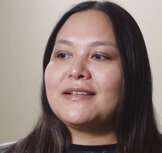
Angele Alook is the Director of the Centre for Indigenous Knowledges and Languages, and an Associate Professor in the School of Gender, Sexuality and Women’s Studies at York University. She is a proud member of Bigstone Cree nation in Treaty 8 territory, where she has carried out research on issues pertaining to the sociology of family and work, resource extraction, school-to-work transitions, Indigenous identity, and seeking the good life (miyo-pimatisiwin) in work-life balance. Her most recent research is about a just transition away from fossil fuels, Indigenous caring economies, and Indigenous climate justice. She is a co-author of a best-selling Canadian book entitled “The End of This World: Climate Justice in so-called Canada” published in 2023 by Between the Line Publishing, in this book she contributed writings on Indigenous legal and social systems of care.
Yux’wey’lupton Butch Dick
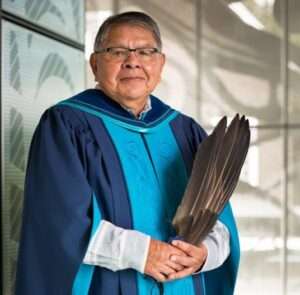
Yux’wey’lupton, Dr. Butch Dick is from the Lək̓ʷəŋən community, better known today as the Songhees First Nation, his family roots extend into the Xw’chalth’lap community, today known as Tsartlip First Nations, and his Grandma on his paternal side was from Ditidaht, which is part of the Nuu’cha’nulth speaking community’s. Butch Dick taught First Nations Art and Cultural Awareness in the Victoria School District 61 for over 25 years. Butch has also worked formally as the educational liaison for the Songhees band. He is also an established and internationally renowned Lək̓ʷəŋən Artist and has artworks throughout Victoria. In 2008, Butch created the Signs of Lək̓ʷəŋən land marks, the originals carved out of cedar were later cast into bronze sculptures which now reside in various culturally significant points on the Lək̓ʷəŋən water line. Spindle whorls were traditionally used by Lək̓ʷəŋən women to spin wool. The spindle whorl was a family heirloom and legacy. Technology that aided in the creation of the wool blankets which were highly prized and suited for the climate the Lək̓ʷəŋən choose to reside. Butch assisted in the redesigning of the Spirit Square formally known as the Centennial Square by Victoria’s City hall where he worked with his sons Clarence Dick Jr. and Bradley Dick, as well as Fabian Quocksister. The Spirit Poles now face the Waters as a gesture of welcome to all visitors to the square.
Carwyn Jones
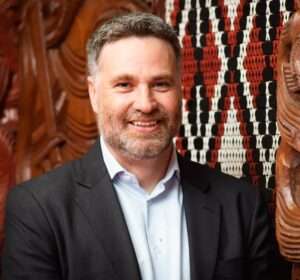
Dr Carwyn Jones is a Māori legal scholar from the Ngāti Kahungunu people. He holds a PhD from the University of Victoria and is the lead academic in the Māori Laws and Philosophy programme at Te Wānanga o Raukawa, a Māori tertiary education institute located in Ōtaki, north of Wellington. Carwyn is also an Honorary Adjunct Professor in the School of Māori Studies at Victoria University of Wellington and is a Fellow of Te Apārangi – the Royal Society of New Zealand. He is a former President of the Māori Law Society and has also served as a negotiator and in governance roles for his own community. He is the author of New Treaty, New Tradition: Reconciling New Zealand and Māori Law, Co-editor of the Māori Law Review, and has published widely on topics relating to the Treaty of Waitangi, the rights of Indigenous peoples, and Indigenous legal traditions.
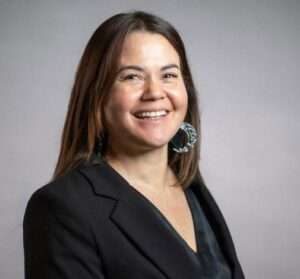
Chaw-win-is
Chaw-win-is lifts up local Indigenous ways of knowing and being, Indigenous governance and pedagogies through haa-huu-pah (storytelling). Her research utilizes podcast technologies for the resurgence of Nuu-chah-nulth identities and histories. Her teaching focuses on decolonization and resurgence within Indigenous communities and includes Indigenous research methods, Indigenous education, social science research methods, discourses in education, and equity, diversity, and inclusion in education. Chaw-win-is is an educator, researcher, advocate and mentor for students and collaborates with Indigenous communities on projects that support “the returning of our canoe".
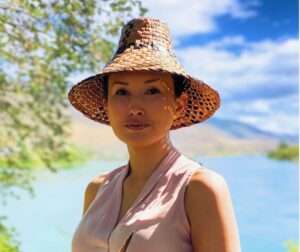
Charlotte Rose
Charlotte Rose is a member of Nak’azdli Whut’en (Dakelh) with paternal connection to Semá:th (Sumas First Nation, Stó:lō). She belongs to the Maiyoo Keyoh Whut’enun and maintains deep familial and territorial relationships across both Dakelh and Stó:lō Nations—connections that continue to shape her legal consciousness, responsibilities, and scholarly orientation. Charlotte is a practicing Indigenous lawyer whose work focuses on the revitalization and application of Indigenous legal orders, particularly those grounded in Ancestral / Keyoh governance systems. Her upbringing within a hereditary Keyoh family, committed to the protection of Ancestral territory and governance, informs her approach to law and policy. Her practice engages with the implementation of the United Nations Declaration on the Rights of Indigenous Peoples (UNDRIP) and British Columbia’s Declaration on the Rights of Indigenous Peoples Act (DRIPA), supporting Indigenous Nations in government-to-government negotiations, regulatory law, and rights and title matters. Her work reflects a broader commitment to land-based pedagogy, relational accountability, and the intergenerational transmission of Indigenous legal knowledge.
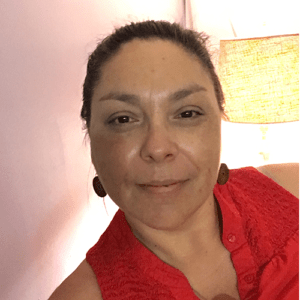
Waaseyaa’sin Christine Sy
Waaseyaa’sin Christine Sy is Ojibway Anishinaabe of mixed ancestry from Bawatig (Sault Ste. Marie, ON). Her mother is from Obishkikaang (Lac Seul First Nation), Northwestern Ontario and her father, from Bell Island, Newfoundland. Her PhD thesis, “Following the Trees Home: anishinaabe’ikawewag yaawaag ishkigamiziganing (Anishinaabe Women at the Boiling Place), elucidates Anishinaabe sovereignty, nationhood, governance through an examination of the historicity of women’s relationship with the sugar bush, particularly during the time of harvesting sap and producing maple sugar. Grounded in Anishinaabeg narratives, which reveals the primacy of women in the relationship with the sugar bush, documentary, photographic evidence, and oral evidence is theorized at various historical periods through a lens of Anishinaabeg knowledges including relationship with land and water and relationship with windigo—settler colonialism, capitalism, and heteropatriarchy. Land and water rematriation through the will of the Anishinabeg Nation is envisioned for the future. Christine is a mother, poet, language and land-based learner and educator. She is an Assistant Professor in Gender Studies at University of Victoria (British Columbia, Canada).
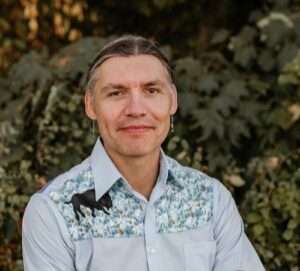
Darcy Lindberg
Darcy Lindberg is nêhiyaw (Plains Cree) from Wetaskiwin, with his relations coming from Samson Cree Nation in Alberta and the Battleford-area in Saskatchewan. He is currently an Assistant Professor with the University of Victoria's Faculty of Law and primarily works within the joint degree program that engages with Indigenous legal traditions alongside Canadian-state law. Darcy’s research and academic work specifically focuses on nêhiyaw law, ecological governance that flows from nêhiyaw law, nêhiyaw treaty making, as well as nêhiyaw constitutionalism and how it interacts with Canadian constitutional law. He teaches courses on constitutional law, Indigenous legal traditions, treaties, and Indigenous environmental legal orders.
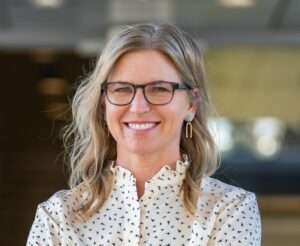
Dayna Scott
Dayna Nadine Scott is Professor at Osgoode Hall Law School and the Faculty of Environmental & Urban Change at York University. She was appointed as York Research Chair in Environmental Law & Justice in the Green Economy in 2018 and is the current Director of Osgoode’s Environmental Justice and Sustainability Clinic. Dayna is co-Director with Heidi Kiiwetinepinesiik Stark of the Infrastructure Beyond Extractivism SSHRC Partnership Grant. She has a long-standing research collaboration with the leadership of Neskantaga First Nation related to resisting extractive infrastructure proposed for the critical minerals deposits in the Ring of Fire and building up vital infrastructures of the Attawapiskat River and its lake sturgeon.
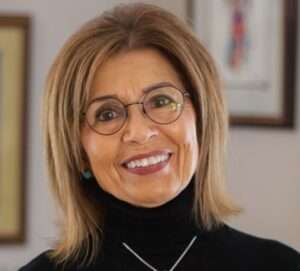
Debra Atterberry
Debra Atterberry is a career educator and advocate for the Osage Language. She worked for 20 years in the Public Schools of Oklahoma as a business teacher, elementary teacher, and literacy specialist. As the curriculum developer for the Osage Nation language department, she helped to develop a unique orthography to write the language. She has also served on the Osage Nation Congress, where she led initiatives in education, health and culture. During her time as a strategic planning analyst and the education services administrator for the Osage Nation executive branch, she developed the Osage Nation’s immersion school. She is currently working to develop early childhood curriculum for the Osage language department.
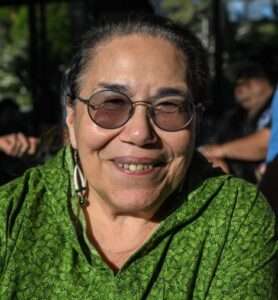
Dian Million
Do’inta. Se’uzra Dian Million. Tog-uh-thi-li eslanh. Bedzeyhti Khwt’ana esdlanh. I am Tanana Athabascan. Dian is an Associate Professor in the Department of American Indian Studies, and Affiliate faculty in Canadian Studies and the Comparative History of Ideas Program at the University of Washington in Seattle. She is the author of Therapeutic Nations: Healing in an Age of Indigenous Human Rights (2013), along with several articles: “There Is A River in Me: Theory From Life,” “Intense Dreaming: Theories, Narratives and Our Search for Home,” and “Felt Theory: An Indigenous Feminist Approach to Affect and History.” The chapter “Spirit as Matter: Resurgence as rising and (re)creation as ethos" that appears in the collection Indigenous Resurgence in the Age of Reconciliation edited by Heidi Kiiwetinepinesiik Stark, Aimée Craft, and Hoku Aikau (2023) is key to a theme she considers in more depth in a book project Dian is currently writing for Common Notions Press entitled In The Spirit of Our Renegade Care. She centers her work on the understanding the effect/affect of racial capitalism/settler colonialism on Indigenous family and community health in North America. She seeks to illuminate the ways in which Indigenous life reorganizes and resurges in the face of colonial violence.
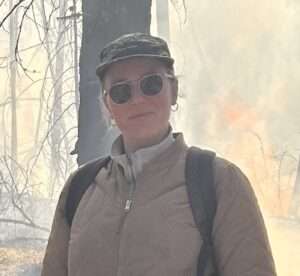
Emma Feltes
Emma Feltes is an Assistant Professor of sociolegal studies in the Centre for Criminology and Sociolegal Studies at the University of Toronto. A settler scholar, writer, and anticolonial activist, she draws on more than a decade working in alliance with Secwépemc and Tŝilhqot’in Peoples in interior British Columbia. Her new research looks at state and Indigenous jurisdiction through the climate crisis, focusing on Tsilhqot’in qwen (fire) law and stewardship. Previously, she was an Assistant Professor of anthropology at York University, and a Fulbright Scholar and SSHRC Postdoctoral Fellow at Cornell.
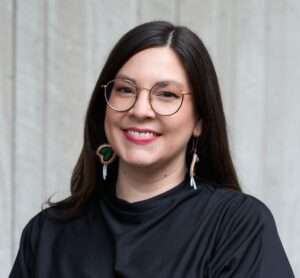
Eva Jewell
Dr. Eva Jewell (she/hers) is Anishinaabe from Deshkan Ziibiing and a member of Chippewas of the Thames First Nation in southwestern Ontario, with paternal lineage from Oneida Nation of the Thames. Her research is in areas of Anishinaabe cultural and political reclamation, Indigenous experiences of work and care, and accountability in reconciliation. In addition to academic scholarship, Eva is a community-engaged researcher, supporting her First Nation in strategic development around areas such as culture, governance, and social wellbeing. She is an Associate Professor of Sociology at Toronto Metropolitan University.
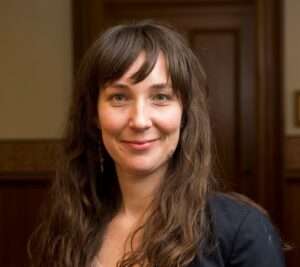
Estair Van Wagner
Dr. Estair Van Wagner is an Associate Professor in the Faculty of Law at the University of Victoria. Prior to joining the faculty at UVic, Dr. Van Wagner taught at Osgoode Hall Law School, where she was the co-director of Osgoode’s Environmental Justice and Sustainability Clinic, and the Faculty of Law, University of Victoria Wellington Faculty of Law (Te Kauhanganui Tātai Ture) in Aotearoa New Zealand. Van Wagner completed undergraduate and postgraduate studies in political science, law, and environmental studies at the University of Victoria, Osgoode Hall Law School, and York University. Dr. Van Wagner has been involved in several SSHRC funded research grants, including as the Principal Investigator of a large-collaborative SSHRC grant examining the relationship between Aboriginal title, Indigenous property and land use systems, and private property on Vancouver Island with Dr. Sarah Morales and Dr. Mike Ekers. She also continues to do research on Maori law and mining in Aotearoa New Zealand as a part of an ongoing collaboration with Dr. Maria Bargh. She is a frequent collaborator with the Office of the Federal Housing Advocate on human rights and homelessness. She researches and teaches at the intersection of property law, natural resource law, planning law, and environmental justice, and her work explores how law is used to structure relations with place and the more-than-human world in both rural and urban settings.
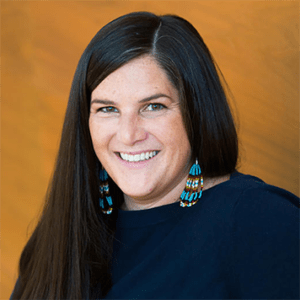
Heidi Kiiwetinepinesiik Stark
Heidi Kiiwetinepinesiik Stark is Turtle Mountain Ojibwe and an Associate Professor in the School of Indigenous Governance. She is the co-editor of Indigenous Resurgence in an Age of Reconciliation with Aimée Craft and Hōkūlani K. Aikau (University of Toronto Press, 2023) and Centering Anishinaabeg Studies: Understanding the World through Stories with Jill Doerfler and Niigaanwewidam Sinclair (University of Manitoba Press, 2013), the co-author of the 3rd and 4th editions of American Indian Politics and the American Political System with David E. Wilkins (Rowman & Littlefield, 2010, 2017), and one of the co-editors of the Native American and Indigenous Studies (NAIS) Journal with Gina Starblanket.
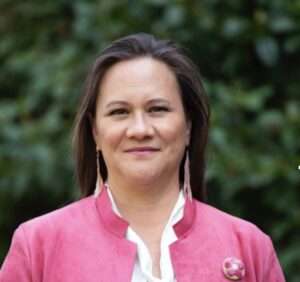
Hōkūlani K. ‘Aikau
Kanaka ‘Ōiwi, is Professor and Director of the School of Indigenous Governance at the University of Victoria. She is the author of A Chosen People, A Promised Land: Mormonism and Race in Hawaiʻi (University of Minnesota Press, 2012). With Vernadette V. Gonzalez, she coedited Detours: A Decolonial Guide to Hawaiʻi (2019) and they edit the Detours Series with Duke University Press. She has also collaborated on two other book projects: Indigenous Resurgence in an Age of Reconciliation (University of Toronto Press, 2023) and Introduction to Indigenous Feminisms (Routledge, 2025). Dr. Aikau is also the editor for the Pacific Islands Monograph Series (University of Hawaiʻi Press).
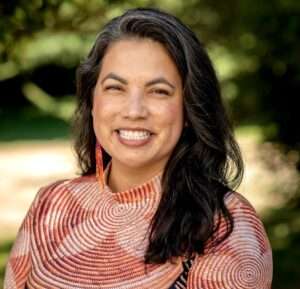
Jana-Rae Yerxa
Jana-Rae Yerxa is Anishinaabe from Couchiching, First Nation in Treaty #3 territory. Jana-Rae has a Master of Social Work degree from Lakehead University and a Master of Arts degree, in Indigenous Governance, from the University of Victoria. Currently, Jana-Rae is a doctoral social sciences student at Royal Roads University and resides in Fort Frances, Ontario. She is Faculty of Anishinaabe Gikendaasowin at the Seven Generations Education Institute serving her home community. As a manoomin harvester, educator, writer and poet, Jana-Rae approaches her personal, and professional lives from an Indigenous feminist, and resurgent lens.
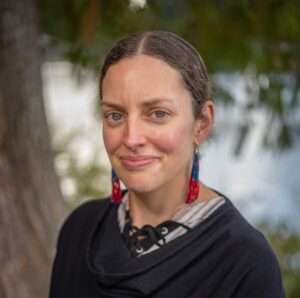
Jean Dennison
Jean Dennison, PhD (Osage Nation) is Co-director for the Center for American Indian and Indigenous Studies and a Professor of American Indian Studies at the University of Washington. She has spent the last 20 years witnessing, researching, and writing about Osage Nation government. She is author of multiple academic articles and two books: Colonial Entanglement: Constituting a Twenty-First-Century Osage Nation and Vital Relations: How the Osage Nation Moves Indigenous Nationhood Into the Future. As Co-director for the Center for American Indian and Indigenous Studies at UW, Dennison has raised 8 million dollars to support programming and grants creating an ecosystem of care for Indigenous students, faculty, and staff at the University of Washington.
Maiyaz Julian
Maiyaz Julian is a proud member of Nak’azdli Whut’en (Dakelh), belonging to the Lusilyoo / Frog Clan and to Nation River and Carp Lake Keyoh[s]. Her legal consciousness and community-based practise are informed by these kinship and territorial relationships. Currently completing her undergraduate degree at UBC, Maiyaz recently completed a research practicum with the Nak’azdli Yinka Huwunline (Natural Resource Department), where she focused on the revitalization of Dakelh Legal Orders through storywork - a methodology grounded in Dakelh ways of knowing and oral traditions. Her work aligns with UVIC’s commitment to community-led legal resurgence and respectful engagement with Indigenous legal orders. Her contributions to the Dakelh Legal Orders project have been deeply shaped by the generational mentorship of Charlotte Rose, whose guidance has supported Maiyaz’s capacity development as both a legal research and steward of Dakelh Law. With over three years of experience in federal policy environments, Maiyaz brings a strong understanding of the interface between Indigenous legal traditions and Canadian legal systems, an area of increasing importance to both academic and applied legal contexts.
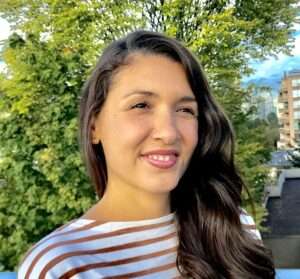
Michelle Daigle
Michelle Daigle is Mushkegowuk (Cree), a member of Constance Lake First Nation in Treaty 9, and of French ancestry. She is an Associate Professor at the University of Toronto with a cross-appointment in the Centre for Indigenous Studies and the Department of Geography and Planning. She also holds a Canada Research Chair in Indigenous Geographies. Drawing on 20 years of collaborations with Indigenous communities and organizations, her research examines Indigenous life-making practices in the muskegs amid the global conditions of colonial capitalist violence. Her current project focuses on the renewal of Indigenous kinship that emerge through Mushkegowuk waterways and how an ethics of care informs conceptions of anti-colonial futures. Her writing has been published in Progress in Human Geography, Annals of the American Association of Geographers, Antipode, Environment & Planning D, Political Geography and The Journal of Peasant Studies, and she recently co-edited Land Back: Relational Landscapes of Indigenous Resistance Across the Americas with Heather Dorries which was published with Harvard University Press in 2024.
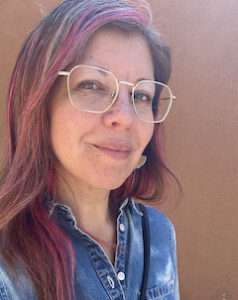
Sarah Hunt / Tłaliłila’ogwa
Sarah Hunt / Tłaliłila’ogwa is a Two-Spirit queer (2SQ) scholar-activist who has spent more than two decades engaged in research by, with and for Indigenous people and communities, with a focus on the relationship between more intimate or embodied scales of Indigenous life and the governance of lands, waters, and relationships across the natural and supernatural worlds. Having joined UVic in 2020 as Canada Research Chair in Indigenous political ecology, Sarah’s research seeks to redefine justice and foster expressions of self-determination through land-based and cultural practices which center gender diverse people, women and youth. Through the Coastal Justice Collective, Sarah works collaboratively with students, community members, and other colleagues in addressing intersecting questions of power, wellbeing, and knowledge sovereignty. Dr. Hunt / Tłaliłila’ogwa is Kwakwaka’wakw, from the Kwagu’ł and Dzawada’enuxw Nations, and is also of Ukrainian and English settler ancestry. Sarah's scholarship has a particular focus on coastal worldviews and ways of knowing, woven through both theory and praxis. Tłaliłila’ogwa is an editor with the journal EPC: Politics and Space and board member of the Urgent Action Fund for Feminist Activism. Sarah is the recipient of the UVic President's Distinguished Alumni Award (2022), AAG Glenda Laws Award For Social Justice (2017) and Governor General's Gold Medal (2014).
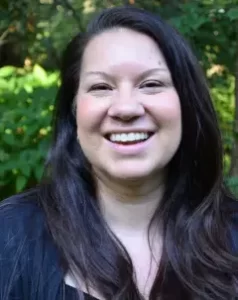
Sarah Morales
Sarah Morales (Su-taxwiye), JD (UVic), LLM (University of Arizona), PhD (UVic), PostDoc (Illinois) is Coast Salish and a member of Cowichan Tribes. She is an Associate Professor at the University of Victoria, Faculty of Law, where she teaches torts, transsystemic torts, Coast Salish law and languages, legal research and writing and field schools. Prior to joining the faculty at the University of Victoria, she taught at the University of Ottawa, Faculty of Law where she taught Aboriginal law, Indigenous legal traditions and international human rights with a focus on Indigenous peoples. Sarah’s research centres on Indigenous legal traditions, specifically the traditions of the Coast Salish people, Aboriginal law and human rights. She has been active with Indigenous nations and NGOs across Canada in nation building, inherent rights recognition and international human rights law.
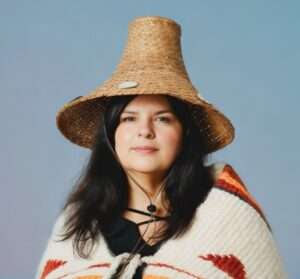
Chief Laxele'wuts'aat (Shana Thomas)
Laxele’wuts’aat, Shana Thomas is the hereditary Chief of Lyackson, a member community of the Historic Quw’utsun Nation. Her Grandfather was hereditary Chief, Thee-o-letza, Clifford Thomas from Lyackson, her Grandmother was Joyce Moody from Squamish Nation; her Great Grandmother was Mary Albany from Songhees Nation, and her Great Grandfather was George Moody, a Hereditary Chief Squamish Nation. She has a bachelor’s degree in political science (2001) and a master’s degree in Indigenous Governance (2008), both from the University of Victoria, and is in the Final year of her Doctor of Social Science from Royal Roads University.
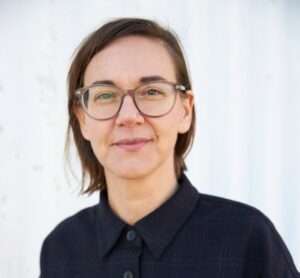
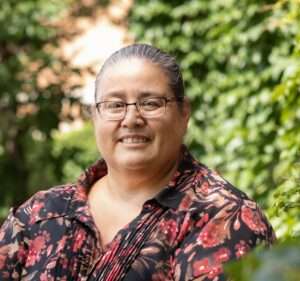
Susan Hill
Susan Hill is a Grand River Haudenosaunee citizen (Mohawk Nation, Wolf Clan); she and her family reside at Six Nations of the Grand River. Her academic training includes a PhD in Native Studies from Trent University, MA in American Studies from SUNY-Buffalo, BA in History from the University of Michigan and adult language immersion programs through Onkwawenna Kentyohkwa (Kanyen’keha/Mohawk) and Grand River Employment & Training (Gayogohono/Cayuga). She is an Associate Professor of Indigenous Studies and History at the University of Toronto where she also serves as the Director of the Centre for Indigenous Studies.
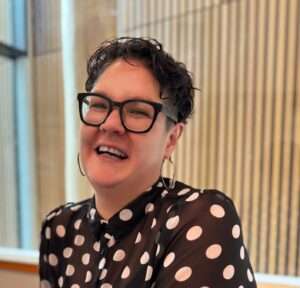
Tara Williamson
Tara Williamson is Co-Research Director at ILRU. Tara is a member of the Opaskwayak Cree Nation and was raised in Gaabishkigamaag (Swan Lake, Manitoba). Tara also has close family ties to Beardy’s-Okemasis in Saskatchewan and is an adopted member of the House of Dhadhiyasila of the Haíɫzaqv Nation, where they carry the name k̓vák̓vṃt̓a. She holds degrees in social work, law, and Indigenous governance and has been a professor and/or instructor at Fleming College, Trent University, Toronto Metropolitan University/First Nations Technical Institute, the University of Winnipeg, and the University of Victoria. As an independent consultant, she has worked with and for Indigenous communities and organizations at the local, regional, provincial, and national level. Tara is also a Research Fellow with the Yellowhead Institute as well as a professional writer and musician.
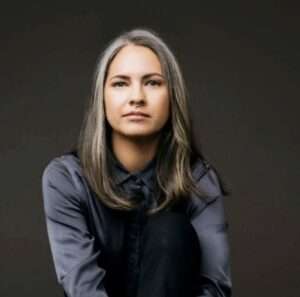
Mandee McDonald
Mandee McDonald is a hide tanner, workshop facilitator, and a PhD candidate in the Faculty of Native Studies at the University of Alberta where her work focuses on Indigenous governance and land-based learning. She is a co-founder and the Managing Director for Dene Nahjo, an Indigenous innovation collective that fosters Indigenous leadership skills and values through resurgence-based initiatives. Mandee is Maskîkow (Swampy Cree), originally from Mántéwisipihk (Churchill, MB), and has resided in Sòmba K’è (Yellowknife) for most of her life. Her writing has been published in Decolonization: Indigeneity and Education Society, Northern Public Affairs, and in Visions of the Heart: Issues Involving Indigenous Peoples in Canada 5th Edition.